Fantasy
Creativity
Ecology
Creating a Place
Hard work, determination, courage, and ideas.
I had almost no experience in renovation or building work. I knew a little about electricity and plumbing, could use a circular saw and a jigsaw, and drill holes—but that was about it. I had no experience with gardening tools, engines, angle grinders, let alone pumps, electrical panels, or regulations.
I learned everything on the job. I spent a lot of time studying, comparing, and testing things out on site. I moved forward step by step, unafraid of making mistakes, driven by the desire and energy to keep trying until I got it right. At first, managing projects was tricky because I didn’t really know what I was doing. So, I often worked alone, but I also received help, advice, and valuable input from others. Gradually, I was able to welcome novices—generous people eager to help and learn at the same time.
Organizationally, I had to juggle multiple fronts: living comfort, land development, gardens, more whimsical projects, and the necessary setups to host workshops and retreats.
Fantasy Farm is, above all, a playground and a space for experimentation. There’s no pressure for results—only the joy of creating matters. There will always be so much more to do, to build, to transform this place into spaces for living, well-being, and daydreaming.
The Main House
Small, Eco-Friendly, and Cozy
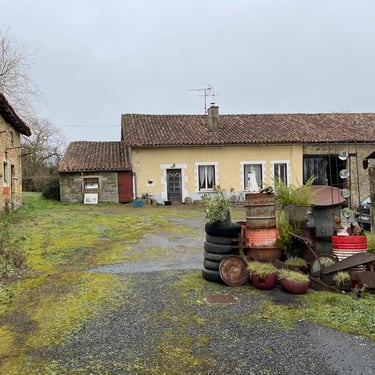
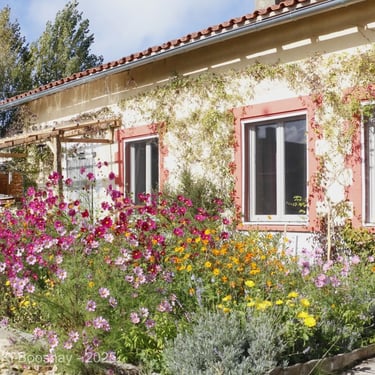
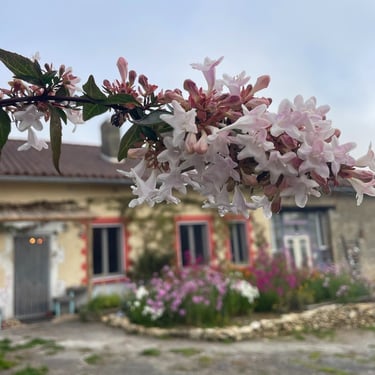
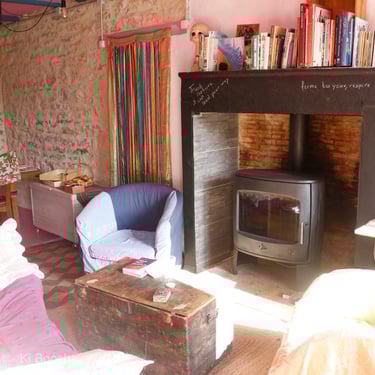
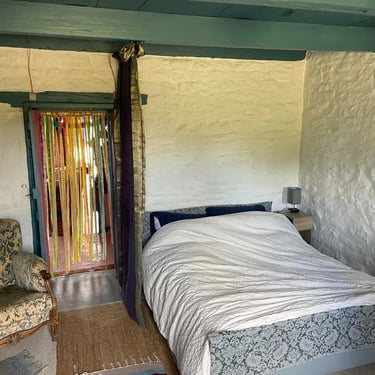
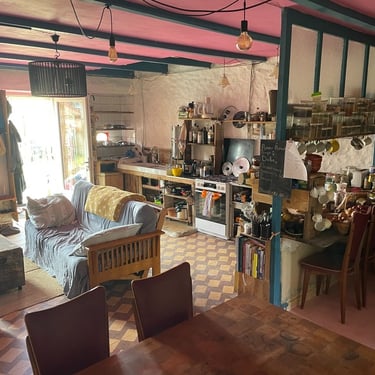
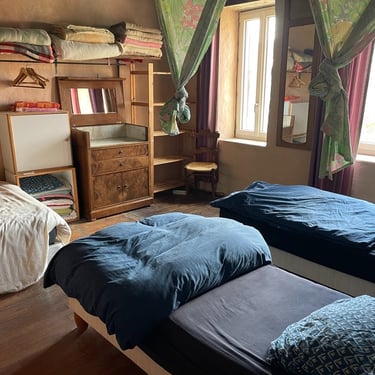
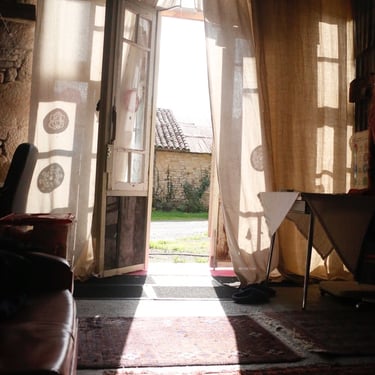
This 70 m² cottage is the all-season heart of Fantasy Farm. It features the main kitchen, a dining area, a living space, a large pantry, and two bedrooms: one single room at the back overlooking the meadow, and a dormitory facing south toward the courtyard.
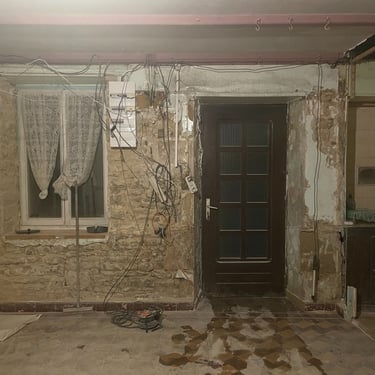
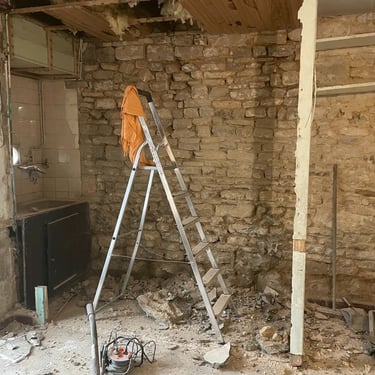
Insulation was the key to making this space comfortable and eco-friendly year-round, and it was the top priority during renovations, which unfolded over several years. Work began on the first day with the dormitory and was completed in October 2024 with the single bedroom.
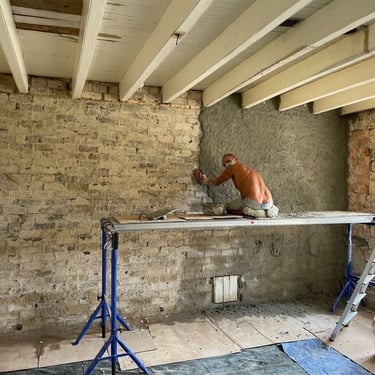
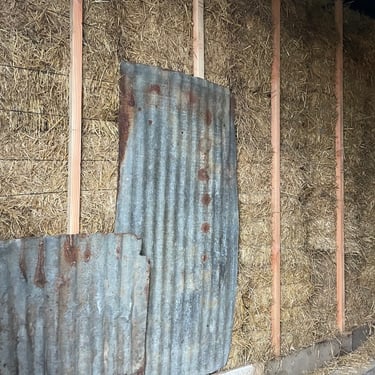
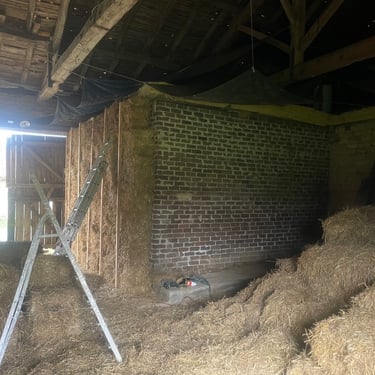
All the walls were stripped back to the stone and repointed with a sand and lime mortar. The dormitory walls, being thinner, were insulated with a 6 cm interior lime and hemp plaster and covered with straw bales on the exterior, protected within the barn. Ceilings were insulated with a double layer of glass wool. Windows and doors were replaced with double-glazed models. Finally, gutters were redone, significant excavation and drainage were installed at the rear of the house to reduce moisture, as part of the building is semi-subterranean.
Heating is provided by a wood-burning stove, which keeps the living area warm and cozy, while the bedrooms stay cooler—perfect for a restful night’s sleep.
The Shower, Bath, and Sauna
Eco-Friendly, Comfortable, and Close to Nature
The original bathroom, which had been installed in what is now the dormitory, was demolished. The water distribution system in the house was no longer functional, but more importantly, the design was poorly conceived and took up too much floor space.
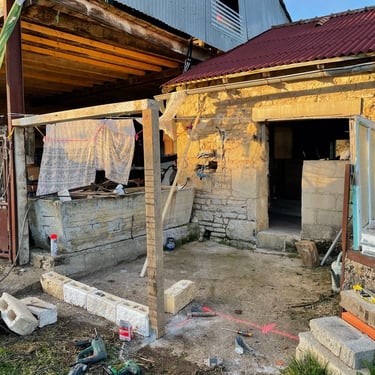
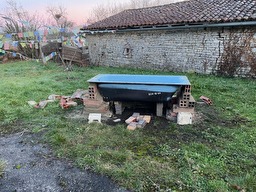
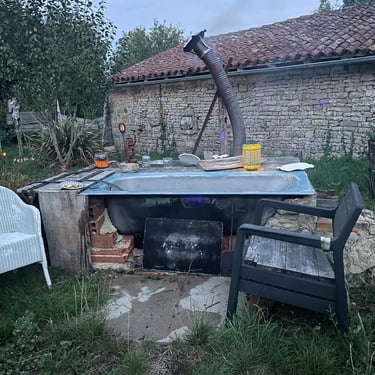
The idea of a shower in a greenhouse came to me after seeing similar setups in other eco-communities. The practical aspects won me over: making the most of available resources, taking advantage of the south-facing exposure, and simplifying water access and drainage. As for the bathtub, I had already experienced an outdoor wood-fired tub and was captivated by its comfort and beauty.
Here’s how the project unfolded:
December 2020: Removal of the bathroom and indoor toilet.
June 2021: Reopening of the walled-up south entrance to the old pigsty building and installation of cold water.
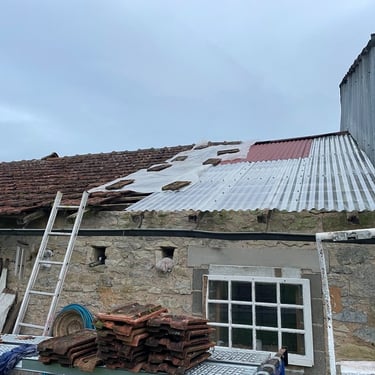
August 2021: Repair of a section of the old pigsty’s roof.
October 2021: Installation of the first water heater.
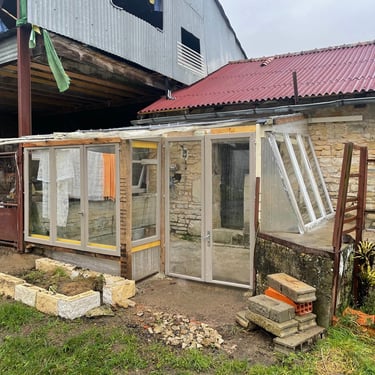
Christmas 2021: Construction of the wooden frame, installation of roofing and walls.
Autumn 2025: Complete redesign and beautification.
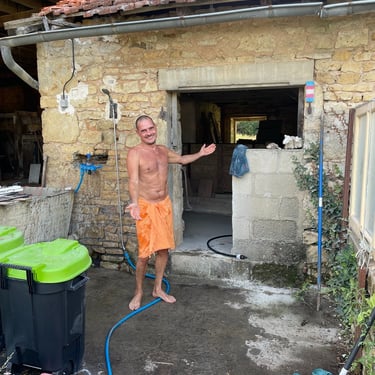
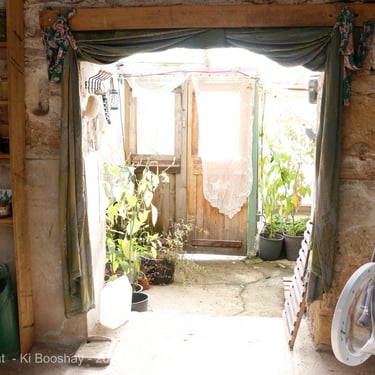
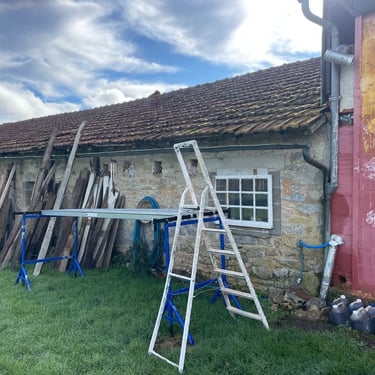
The greenhouse was built on a wooden frame, partly using reclaimed materials, with a roof made of multiwall polycarbonate sheets and walls composed of salvaged windows. It is attached to the south-facing wall of the old pigsty, where a previously walled-up opening was reopened. This space is located between the old pig weighing and loading ramp and a large trough, which will be repurposed as a planter.
Water supply is straightforward: a rainwater collection tank is located in this part of the property, and a gas water heater provides very hot water, even in cold weather. The greenhouse itself is always at least 5°C warmer than the outside temperature.
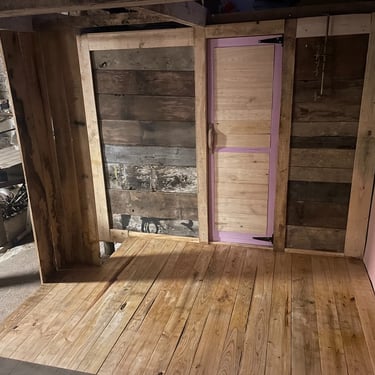
Until autumn 2025, this greenhouse also served as a space for growing seedlings and vegetables, adding a special charm—tomatoes, basil, eggplants, and peppers thrived here in the summer. In autumn 2025, with the construction of a larger greenhouse in the vegetable garden, the shower greenhouse was redesigned to become a dedicated wellness area, featuring three showers, storage and drying spaces for towels. The interior room at the back is also being renovated: it will house a laundry area and serve as an anteroom between the shower greenhouse and the sauna, located just opposite.
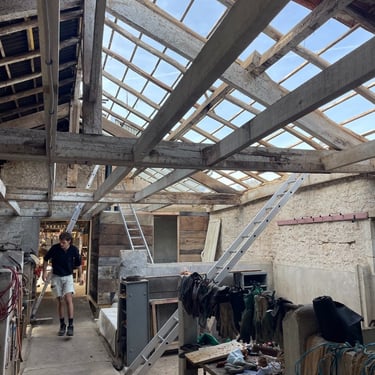
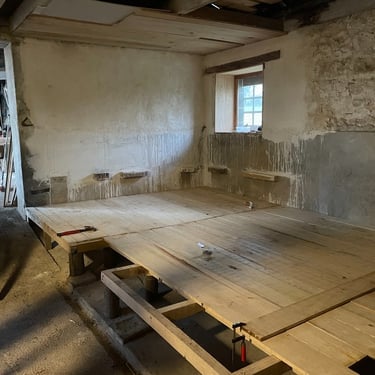
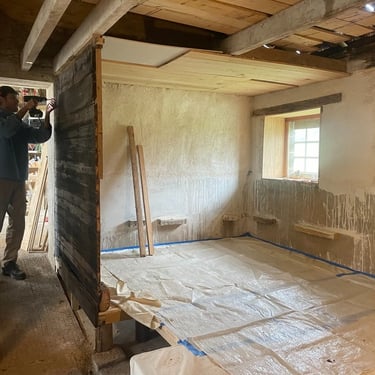
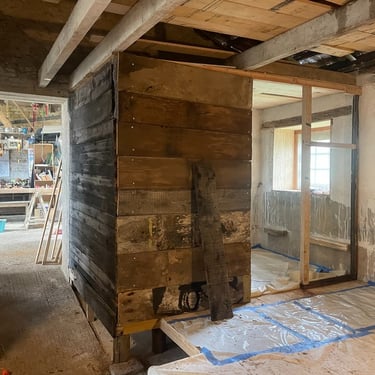
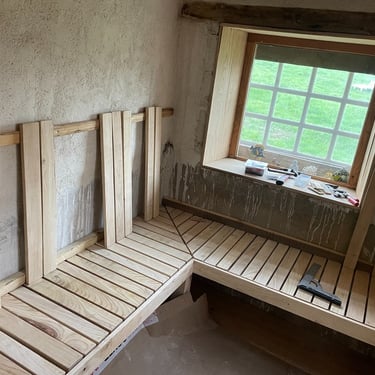
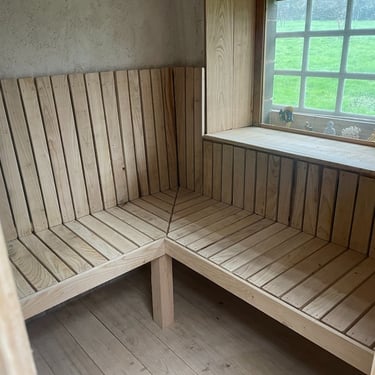
Speaking of the sauna, it was built at the end of winter 2024 and is a wonderful addition to Fantasy Farm. Self-built and heated by a wood-burning stove, it easily reaches 55°C, perfect for relaxation. It’s a place to linger, especially on cold, dreary days, but it’s used year-round. A cold plunge pool is installed in the meadow for refreshing dips. The sauna offers a view of the meadow through a thoughtfully placed window. An adjacent massage area completes the wellness space at the heart of Fantasy Farm. To build the sauna, the roof was redone, and transparent panels were chosen, bringing in natural light that has transformed the entire area and enabled further improvements.
The Barn
A Rebirth
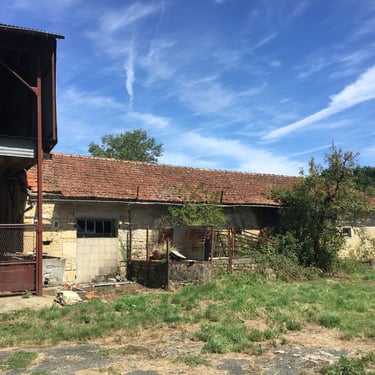
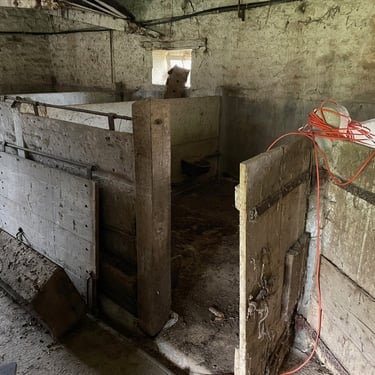
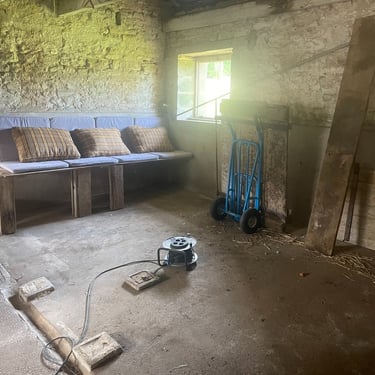
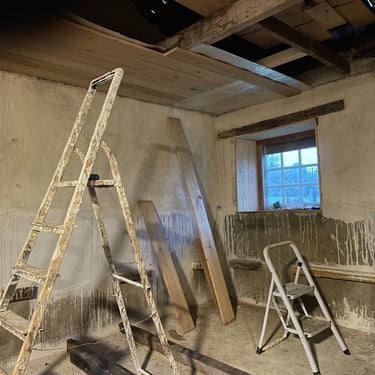
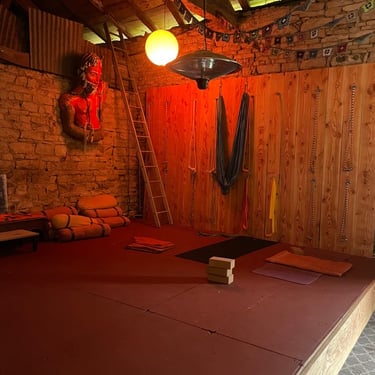
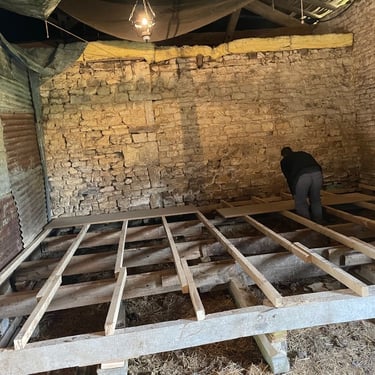
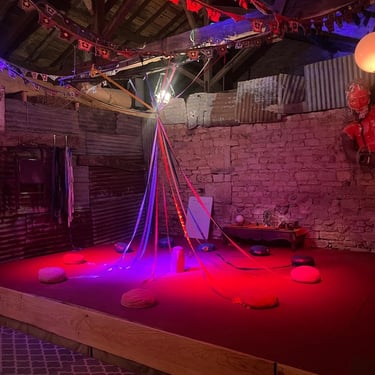
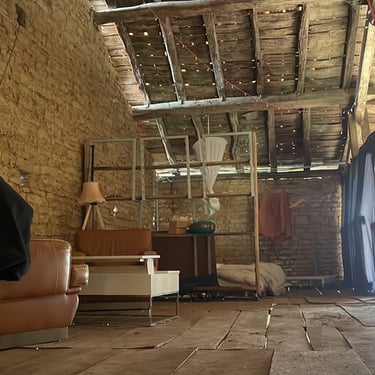
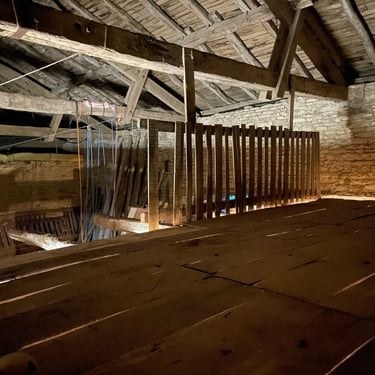
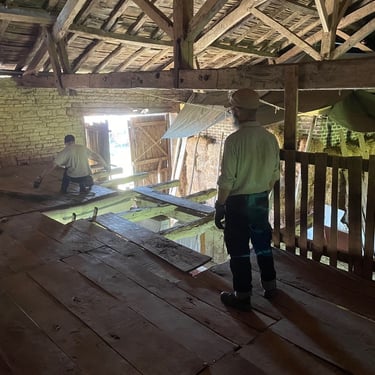
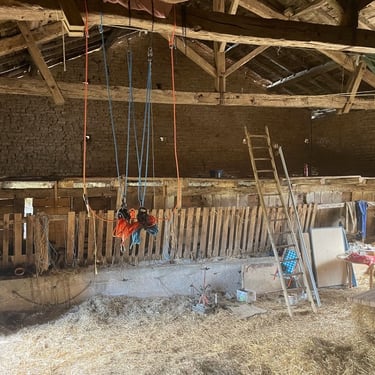
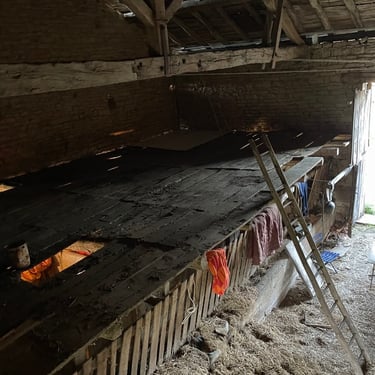
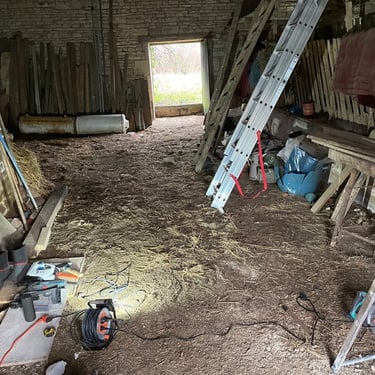
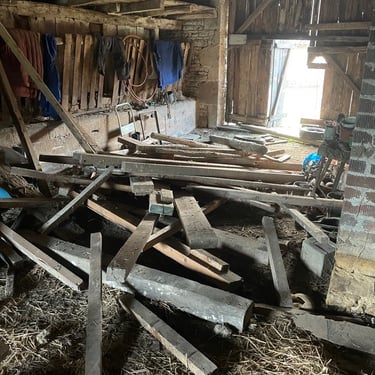
The Barn is a space both generous and transformed, the result of extensive renovation work. On one side, a corridor of animal stalls—once partitioned—was opened up to create new possibilities. Above, a floor rotted by time, unstable and crumbling, was completely dismantled, reinforced, and rebuilt using reclaimed planks that were still solid and reusable.
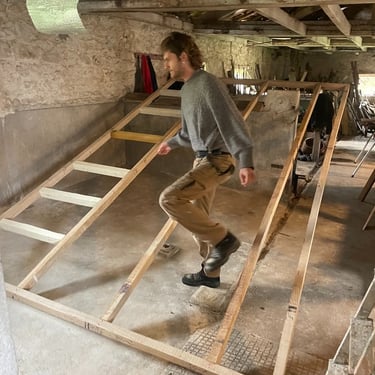
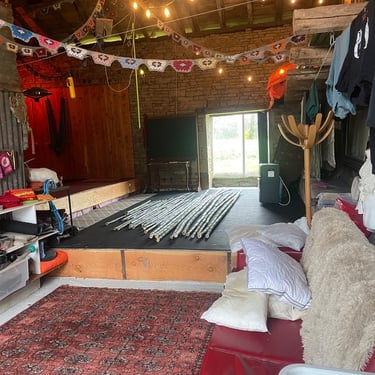
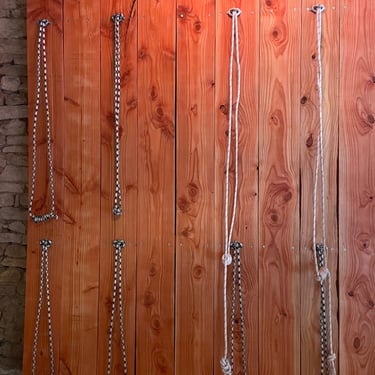
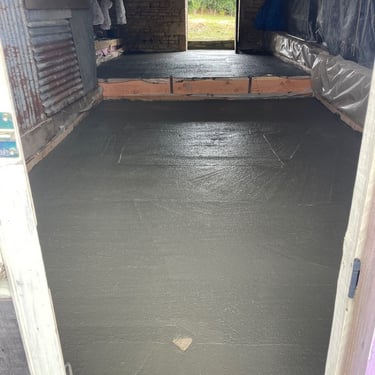
On the other side, a vast area of packed earth and stones, marked by a 50 cm drop in level, became the foundation for a platform. Two concrete slabs were poured, and a wall was specially equipped for Iyengar yoga practice.
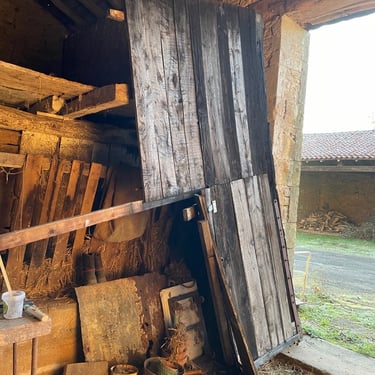
I mustn’t forget the massive wooden door that collapsed shortly after my arrival. This incident forced me to learn carpentry on the spot in order to rebuild one entire section.
Steps of the Transformation
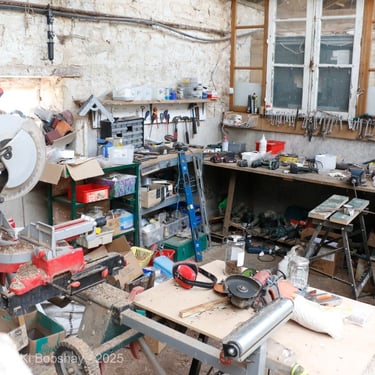
The first phase involved converting the stalls into a workshop and storage space. Next came the floor: nearly 30% of the planks were beyond repair. Fortunately, reclaimed flooring from the pigsty, cottage, and pantry allowed us to reconstruct a solid surface. This area now houses a dormitory with four beds.
Since the main house is integrated into the barn, the bedroom walls were insulated with straw bales, placed on a concrete step to avoid direct contact with the earthen floor.
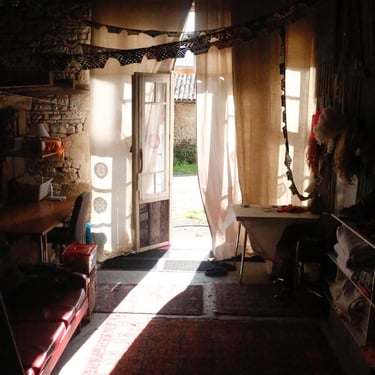
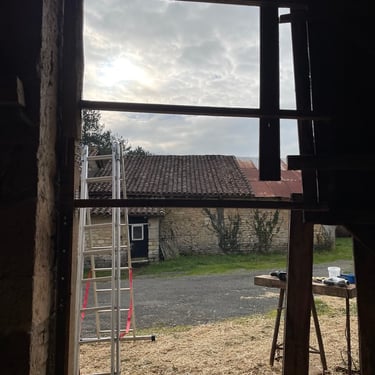
The main door was eventually removed and replaced with a structure made from reclaimed windows.
The L-shaped layout of the space featured a recessed area with an uneven floor, strewn with large stones. The idea of installing a platform became obvious: a versatile space serving as a workshop, stage for performances, and practice area.
To complete the project, the rest of the floor was leveled and cleaned. Four tons of gravel were spread, and two new concrete slabs were poured. The result: three distinct levels—the entrance, an intermediate platform, and the stage—making the space functional, clean, and aesthetically pleasing.
Water and Waste
A Respectful Cycle at Fantasy Farm
At Fantasy Farm, water is a precious resource, managed with care. Two underground tanks collect and store a large volume of rainwater, which is used for watering the gardens, showers, and the washing machine.
The toilets, located in outdoor annexes, are equipped with separating systems. Waste is then composted for three years. The composting area, built on a concrete slab with drainage connected to the sewer, strictly adheres to current environmental regulations for dry toilets.
All kitchen green waste naturally joins the compost, ensuring the diversity of materials essential for effective decomposition.
Gardening waste is composted at various points throughout the garden and hedges. Pruned branches are chipped and spread over the vegetable plots, while grass clippings are used as mulch for fruit trees and shrubs. This practice enriches the soil with nutrients, protects plants from the sun and extreme heat, and reduces the need for watering. Additionally, green manure is regularly sown in the vegetable garden to improve soil quality.
The Gardens
Planting to Be
Connection with nature is essential, necessary, vital. Watching it nourishes the soul. Digging your fingers into it, feeling the earth, is deeply therapeutic. Many people are afraid of it: its exuberance, its power, its chaos are probably to blame. But what relationship do we want to have with it? To dominate it, or to build a dialogue?
I've often heard complaints about "weeds," the chore of mowing, cutting back, maintaining. For me, the moment I start gardening, I feel alive. I receive, I nourish myself. This cycle never stops, it's a connection to the eternal. And what makes me happy is knowing that everything I do here only matters to me, for the pleasure of gardening, simply. Nature goes on its way, with or without me. So what can I contribute to it? That's the question I devote myself to here.
I draw inspiration from the diversity of plants, from the relationship to the wild — animal and vegetal — and the interrelations woven within it: the principles of permaculture, food forests, forest gardens, images of gardens and natural places I've visited. I've also been lucky to receive the help and advice of experienced gardeners, each bringing their own stories, tricks, and experience.
Fantasy Farm is made up of several spaces: the courtyard, the vegetable garden, the meadow. Within these, I've created plant subdivisions. The entrance and the areas around the buildings are key spots: they shape a setting, a welcome, a relationship with the built structures and living areas. There are the paths — those that already exist, and those you invent. There are moods, breaks, colors, scents. All of this has to be thought through in relation to the resources available — water, light, wind, microclimates.
Then comes the choice of plants and the order of planting.
The Hedges
I started with the hedges: understanding them, redefining them, moving forward step by step, year after year. My wish was to create a visual barrier with the neighbors, using local trees and shrubs, a diversity of varieties, and to think of the animals that live there, feed there, hide there, shelter there, and thrive there. I didn't want a straight line, but a setting, a relief, where every angle offers a new point of view, a path to discover.
The Orchard
The fruit trees were planted in December 2021, after a year of thinking it through. No rows: wandering matters too much to me. A garden should be poetic, not rigid or purely functional, in order to be therapeutic. I planted stakes with colored ribbons to feel out the spaces on site, to check access to light. I chose the species and varieties with the Prom'Haies association, taking pollination and fruit production and storage periods into account. I placed the order, dug the holes, watched how the water pooled or drained away. Some holes were filled back in, others dug again. When the young trees arrived, I let my instinct decide: yes, this is the right spot.
Four years on, the success rate is fairly satisfying. A few trees have died — two apricot trees, a peach tree, a plum tree, a cherry tree, an apple tree — but most seem well placed and are starting to bear fruit. Pruning follows the rules, but also instinct. Treatments against pests and disease are natural, organic. I keep learning, season after season.
The Vegetable Garden and the Greenhouses
The vegetable garden is an essential, complex undertaking: the soil, the rotations, the companion plantings, the needs and constraints of each vegetable. I take it step by step. Nature needs time, the soil has to be prepared, built up. Before you can work truly living, organic soil, you need to layer natural ingredients, again and again. I've set to work on it, and I'll need to keep amending it with manure and compost.
The greenhouses matter too. I've built several — for the workshop, for seedlings, cuttings, nurseries — some in full sun, others more sheltered. A first small greenhouse, where I also installed a shower, convinced me of the need for a larger growing greenhouse. It was built in autumn 2025 and should be operational by the end of winter 2026.
Flowers and Pollinators
Flowers, colors, scents aren't just beautiful to look at: they're essential to the cycle, to the whole plant and animal system. They attract the insects that spread pollen and feed the birds. The vegetable garden and the orchard can't thrive without them. Every shrub was chosen with this in mind. Roses are everywhere, along with herbs, medicinal plants, and all the flowers that bloom from spring through to the end of autumn.
Birds and Bats
In winter, I feed the birds. Swallows and bats are welcomed with open arms: I protect their nests, I do everything I can so they feel safe, so they can breed and play their part as natural pest control.
I invite you to come discover the gardens of Fantasy Farm. Come walk here, take an interest, get involved. Come recharge and receive what nature has to give: life, generosity, joy, breath. Here, every gesture is a dialogue, every season a lesson. And if you wish, you too can dig your fingers into the earth, and a little of yourself, simply to be.
A Sanctuary for Swallows
Every year, from April through the end of August — sometimes into the first days of September — the swallows return to Fantasy Farm. Here they find a preserved, protected place where they can live entirely free.
A population that reflects a restored balance
The property is now home to around twenty swallow nests, spread across five distinct areas:
the back of the former pigsty, behind the workshops, above the wood storage area;
the barn area, under the flooring, fully open;
the two small cottages, with no doors or windows, letting the swallows come and go freely;
a half-open outbuilding, where several nests have settled in shelter;
the passage linking the courtyard to the meadow, a former animal-pen area that's been redeveloped, where new nests have appeared this year.
Each nest typically raises three broods a year, with about four chicks per brood. Add the two parents, and that's around fourteen birds per nest, per season. Multiplied across some twenty nests, that adds up to a population of roughly a hundred swallows living, growing, and breeding here every year.
An environment that suits them
If the swallows come back year after year, it's no accident. Their presence is a sign of an environment that works for them: enough insects to feed on, flowers and vegetation planted and shaped to support a whole ecosystem. The quiet hum that fills the days at Fantasy Farm is theirs too.
A social life that reaches far beyond the nest
What's striking here is how at home the swallows seem to feel. They'll even land on the ground — a rare, vulnerable behavior for this species, and a sign of a trust rarely seen elsewhere.
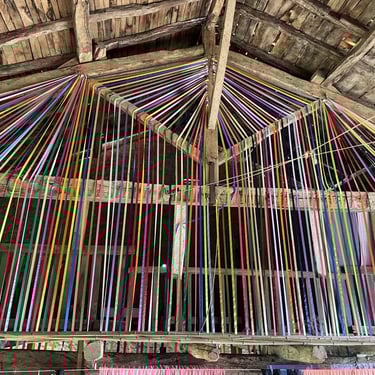
Their social life isn't limited to the nest. String lights hung under the flooring double as improvised perches: sheltered there from any predator, the swallows gather, rest, and socialize, free of any nesting demands. These shared resting spots make Fantasy Farm far more than a nesting site — it's a real living territory for the swallows.
Platforms designed for their comfort and safety
Under each nest, a small platform has been built, set just far enough back to never get in the way of the swallows coming and going. It serves several purposes: it catches the droppings and protects the ground below, but it also acts as a safety net for fledglings — during their first, hesitant flights, they can land there and gather themselves before trying again. The parents use it too, perching for a moment between hunting trips, catching their breath before heading off again to feed their young.
A natural ally against mosquitoes, and a chapter still to write with the bats
The swallows' presence has a very concrete effect on daily life at the farm: as long as they're around, from April to the end of August, they hunt mosquitoes throughout the day, helping keep the site nearly free of them.
Fantasy Farm wants to build on this ecosystem dynamic by growing its bat population too — another great predator of night-flying insects. A few bats are already present on site, and several bat boxes have been put up to welcome them. But their numbers remain modest for now, and the goal is clear: keep creating the conditions for that population to grow, alongside the swallows, for an even fuller balance between day and night.