The garden, our guide and therapist
The proven benefits of gardening and connecting with nature are at the heart of the Fantasy Farm project.
Mark
1/12/20263 min temps de lecture
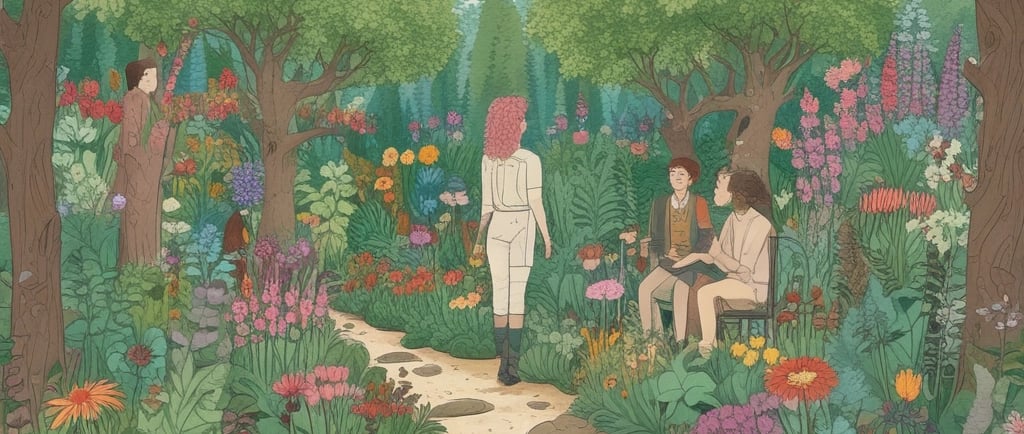
The Garden: A Natural Remedy for Mental Health & a Mirror of Diversity
In a world shaped by urbanization and social challenges, gardening and connecting with nature emerge as powerful tools for mental health. Beyond their individual benefits, these practices offer a precious lesson: the value of diversity. A thriving garden depends on the coexistence of varied species, each playing a unique role in the ecosystem’s balance.
🌱 Stress & Anxiety Reduction
Contact with nature, especially through gardening, significantly lowers cortisol levels—the stress hormone. A study in Frontiers in Psychology (2019) found that horticultural activities improve mood and reduce physiological stress markers. Researchers emphasize that this effect is amplified by the diversity of sensory stimuli (colors, scents, textures) offered by a varied garden (Van den Berg et al., 2019).
🌈 Mood Enhancement & Natural Antidepressant
Gardening boosts the production of neurotransmitters like serotonin and dopamine. A meta-analysis in Preventive Medicine Reports (2017) revealed that people who garden experience fewer depressive symptoms. The diversity of plants, each with unique needs and cycles, also fosters patience and acceptance of differences—qualities that translate to social life (Soga et al., 2017).
🌍 A Mirror of Diversity
A thriving garden relies on the complementarity of its elements: plants with different needs, pollinating insects, and soil microorganisms. This interdependence mirrors the richness of human societies, where diversity of genders, origins, and cultures is a strength. A University of California study (2021) showed that community gardens, by bringing together people from diverse backgrounds, foster empathy and reduce prejudice (Wakefield et al., 2021).
💪 Resilience & Self-Esteem
Caring for a garden teaches perseverance and respect for natural rhythms. These skills strengthen resilience in the face of personal and social challenges. Research from the University of Texas (2020) highlighted that gardeners develop better self-esteem, partly through recognizing the value of every garden element, whether modest or spectacular (Waliczek et al., 2020).
🧠 Cognitive Effects & Open-Mindedness
Exposure to green spaces enhances concentration and creativity. A study in Environmental Psychology (2015) found that children exposed to diverse gardens develop more flexible thinking and better problem-solving skills. This cognitive openness can extend to a deeper understanding of human differences (Berman et al., 2015).
🦠 The Role of Soil Microbes
Soil microbes, like Mycobacterium vaccae, improve mood by stimulating serotonin. Their presence reminds us that every element—even invisible—contributes to the overall balance. This interdependence is a powerful metaphor for societies, where every individual, regardless of identity, plays an essential role (Lowry et al., 2018).
🌻 An Invitation to Immersive Well-Being at Fantasy Farm
Gardening and connecting with nature are more than hobbies—they are schools of life. They teach patience, resilience, and, above all, the invaluable lesson of diversity. By cultivating a garden, we learn to celebrate differences, whether botanical or human, as essential assets to our well-being.
At Fantasy Farm, our immersive retreats embody these principles. Workshops and retreats invite you to experience a holistic journey, where connection to the earth is paired with yoga, massage, and well-being practices. These activities amplify the mental health benefits of gardening, enhancing stress reduction, mood improvement, and resilience.
Imagine yourself:
Rooted in the earth, hands in the soil, practicing yoga to harmonize body and mind.
Soothed by massages that release tension, while discovering how plants and soil microbes act as natural allies for your well-being.
Inspired by the diversity of gardens, people, and practices, in a space where every difference is celebrated and interconnection becomes a source of collective strength.
Our retreats are designed to offer a transformative experience, where every action—whether planting, meditating, or sharing—becomes a step toward inner balance and a more inclusive worldview. Join us to relearn how to live in harmony with yourself, others, and nature.
« At Fantasy Farm, we don’t just cultivate gardens—we cultivate spaces of healing, connection, and celebration of life, in all its forms. »
📚 Scientific References
Berman, M. G., et al. (2015). Environmental Psychology.
Lowry, C. A., et al. (2018). University of Colorado Study.
Soga, M., et al. (2017). Preventive Medicine Reports.
Van den Berg, A. E., et al. (2019). Frontiers in Psychology.
Waliczek, T. M., et al. (2020). University of Texas Study.
Wakefield, S., et al. (2021). University of California Study.